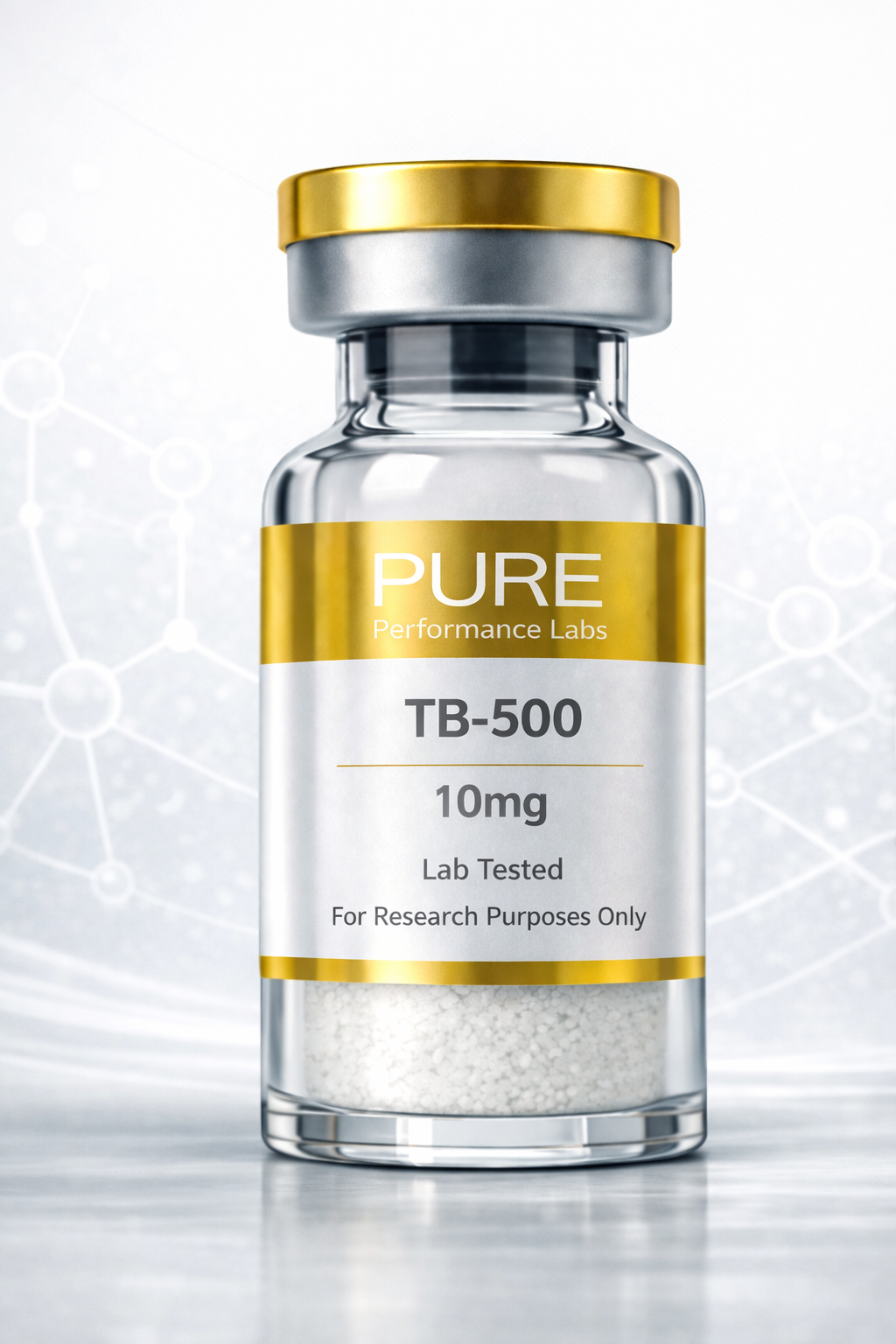
Research Grade Peptide

TB-500
- Research Grade
- 99% Purity
- Third-Party Verified
TB-500
Price range: R599,00 through R999,00
What is TB-500?
TB-500 is a synthetic version of Thymosin Beta-4, a naturally occurring peptide that plays a crucial role in healing and tissue regeneration throughout your body.
How Does It Work?
It works by promoting cell migration to injury sites, reducing inflammation, and building new blood vessels. Unlike most healing compounds, it can travel throughout your entire body to find and repair damaged tissue – not just where you inject it.
Who Is This For?
Ideal for research into systemic healing, chronic injury repair, flexibility improvement, tendon/ligament recovery, and reducing scar tissue formation.
This is a simplified explanation for educational purposes. For detailed scientific information, see the Product Specifications section below.
Simple Explanation
What is TB-500?
Thymosin Beta-4 is a naturally occurring peptide in your body that acts as a 'repair signal' - telling damaged cells how to heal and regenerate more effectively.
How Does It Work?
It promotes the migration of stem cells to injured areas, helps form new blood vessels, reduces inflammation, and prevents excessive scar tissue. It's especially effective for injuries that aren't healing properly on their own.
Who Is This For?
Best for research into chronic injury recovery, tendon and ligament repair, wound healing, reducing fibrosis (scar tissue), and improving tissue flexibility.
Functional Performance Profile
Key Benefits
- Recovery Enhancement
- Healing Support
- Tissue Repair
Product Specifications
- Purity: 99.6%
- Form: Lyophilized peptide
- Storage: 2-9°C Refrigerated
Research Information
- Type: Thymosin peptide
- Focus: Recovery and healing
Research Dosage Overview
- Initial phase: 0.75-1.0 mg twice weekly
- Standard research range: 1.0-1.5 mg twice weekly
- Advanced research range: 2.0-2.5 mg twice weekly
- Research cycles typically extend 4-8 weeks
Mechanism of Action
TB-4 promotes tissue repair through multiple mechanisms: actin regulation for cell motility, promotion of endothelial cell differentiation and migration, inhibition of inflammatory mediators, and activation of tissue-resident stem cells. It essentially optimizes the cellular environment for healing.
Key Research Characteristics
Natural Regenerative Peptide
Thymosin Beta-4 is naturally produced by the thymus gland and found in high concentrations in wound fluids, platelets, and other tissues. TB5 (5mg) is the pure, synthetic version.
Actin-Sequestering Function
TB-4's primary mechanism involves sequestering G-actin monomers, regulating actin polymerization which is essential for cell structure, movement, and division during tissue repair.
Multi-System Benefits
Research shows positive effects across multiple organ systems: cardiovascular, dermatological, neurological, and musculoskeletal - rare for a single peptide compound.
Potential Benefits in Research
Tissue Repair & Healing
- Accelerated wound closure and healing
- Reduced inflammation and swelling
- Enhanced tissue regeneration quality
- Improved scar appearance and flexibility
- Cardiovascular Protection
- Cardiac tissue protection in ischemia models
- New blood vessel formation in damaged heart tissue
- Reduced fibrosis after heart injury
- Improved cardiac function markers
- Neurological Support
- Neuroprotection in brain injury models
- Enhanced neural cell survival
- Improved functional recovery after stroke
- Reduced neuroinflammation
Safety Profile
Important: These side effects are reported from research studies and may vary by individual, dosage, and protocol. Always monitor subjects carefully and consult with qualified researchers.
Generally well-tolerated
- Mild injection site discomfort
- Transient headaches
- Temporary fatigue during healing
- Possible lethargy
- Mild flu-like symptoms (rare)
- Very rare: transient hypotension
Research Applications
RECOMMENDED RECONSTITUTION GUIDE
RECOMMENDED RECONSTITUTION GUIDE This guide explains how research peptides are commonly reconstituted using bacteriostatic water (BAC water), and shows how dosing volumes correspond to syringe units. Always follow sterile preparation techniques when handling research peptides.
Always follow sterile preparation techniques when handling research peptides.
General Preparation
- Use bacteriostatic water (BAC water) only
- Inject water slowly down the inside of the vial
- Do not shake the vial
- Gently swirl to dissolve the peptide powder
- Store refrigerated after mixing
- Use sterile technique when handling
Administration Guidelines
Best practices for TB-500 administration.
- Route
- Subcutaneous injection
- Schedule
- Daily subcutaneous injections for 8–12 weeks (extend to 16 weeks if required)
- Injection Sites
- Rotate injection sites (abdomen, thighs, upper arms)
- Dosing
- Dose Range: 0.50–1.00 mg daily (~5 mg/week average)
- Use sterile technique when handling and administering
- Goal: Support tissue repair, wound healing, and angiogenesis
- Cycle Length: 8–12 weeks (extend to 16 weeks if required)
- Timing: Any consistent time
- Storage - Lyophilized: Store at −20 °C or below in dry, dark conditions
- Storage - Reconstituted: Refrigerate at 2–8 °C; do not freeze reconstituted solution
- Use within ~28 days
- Allow vial to reach room temperature before opening
Cycle Length
View Certificate of Analysis
View Certificate of Analysis Each batch of TB-500 is independently tested by third-party laboratories. Download the Certificate of Analysis to verify purity, identity, and quality.
| milligrams | 10mg, 5mg |
|---|
FOR RESEARCH PURPOSES ONLY
This product is intended for research and laboratory use only. Not for human consumption or medical use. Always consult qualified researchers and follow appropriate safety protocols.


Reviews
There are no reviews yet.