

Only logged in customers who have purchased this product may leave a review.
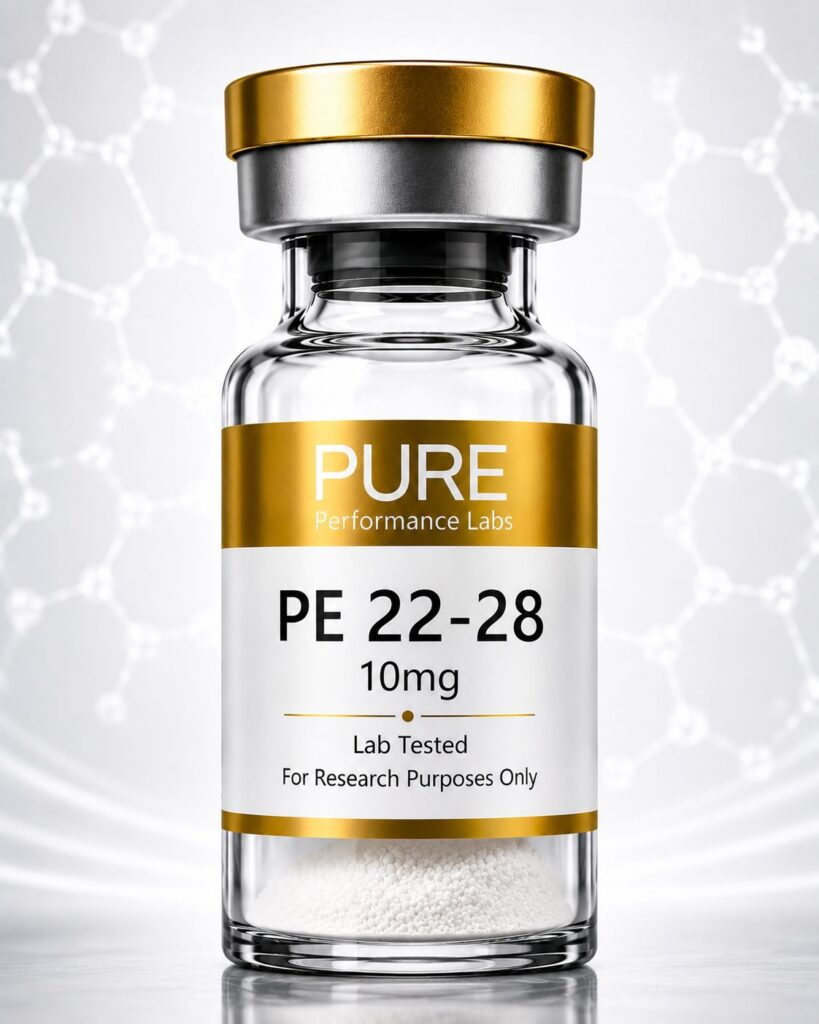
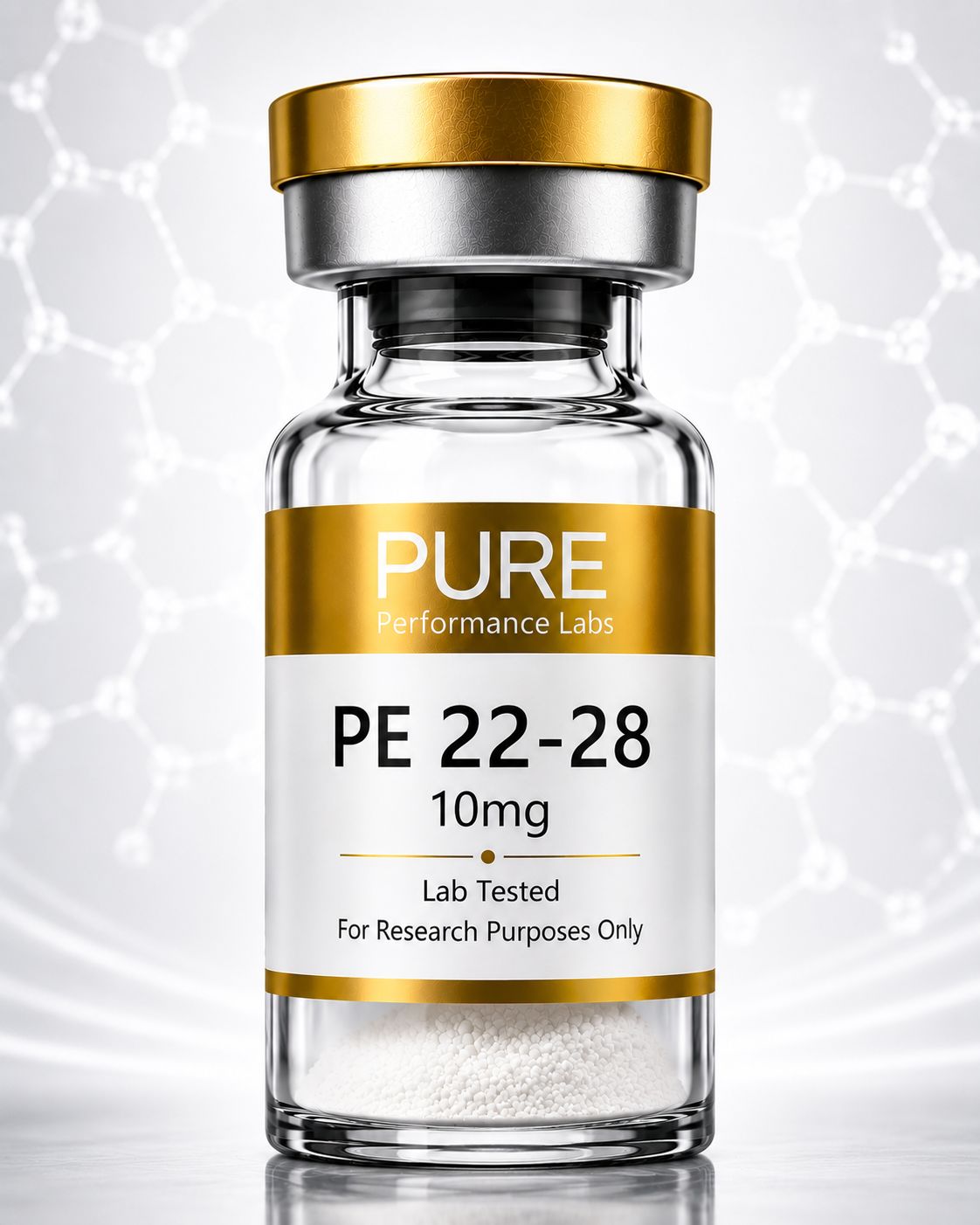
PE 22-28 10mg
Research Grade Peptide
- Research Grade
- 99% Purity
- Third-Party Verified
Reference Strength: 10mg
R599,00
Chemical Name / Amino Acid Sequence: GVSWGLR
Availability: In stock
SKU: PE10
PE 22-28 10mg
R599,00
PE-22-28 is a synthetic heptapeptide derived from the sortilin propeptide and investigated for its potential rapid antidepressant, neuroprotective and neuroplasticity-supporting properties.
Availability: In stock
Included with your purchase
Each qualifying product includes 3ml of 0.9% Benzyl Alcohol Bacteriostatic Water.
Complimentary Purchase Kit
Every qualifying vial includes a complimentary purchase kit at no additional cost.
Research Overview
About PE 22-28 10mg
PE-22-28 is a potent and selective TREK-1 potassium channel antagonist engineered from spadin-related research. Laboratory studies have explored its effects on neurogenesis, synaptic plasticity and mood-related pathways.
How It Works in Research
PE-22-28 selectively inhibits TREK-1 (KCNK2) potassium channels, increasing neuronal excitability and serotonergic signalling. Preclinical studies suggest activation of CaMKII/CREB pathways, increased BDNF expression, enhanced hippocampal neurogenesis and synaptogenesis, with greater potency than spadin in laboratory models.
Research Applications
• Mood regulation • Neuroplasticity • Neurogenesis • Neuroprotection • Cognitive function • Stress resilience
Researchers study PE-22-28 because it may promote brain plasticity, neuronal resilience and mood regulation through selective TREK-1 inhibition.
Product Specifications
- Product Name: PE-22-28
- Reference Strength: 10 mg
- Amino Acid Sequence: GVSWGLR
- Appearance: White to off-white lyophilised powder
Research Information
- Purity Standard: ≥98% (HPLC)
- Category: Synthetic heptapeptide
- Reconstitution: 3.0 mL bacteriostatic water
- Final Concentration: 3.33 mg/mL
- Storage: 2–8°C after reconstitution
Mechanism of Action
PE-22-28 selectively inhibits TREK-1 (KCNK2) potassium channels, increasing neuronal excitability and serotonergic signalling. Preclinical studies suggest activation of CaMKII/CREB pathways, increased BDNF expression, enhanced hippocampal neurogenesis and synaptogenesis, with greater potency than spadin in laboratory models.
Potential Benefits in Research
Rapid antidepressant-like effects in preclinical models.
- Enhanced hippocampal neurogenesis and synaptic plasticity.
- Support for BDNF expression and neuronal survival.
- Neuroprotective effects in experimental stroke models.
- Favorable selectivity without observed cardiac or metabolic effects in preclinical studies.
Safety Profile
Rapid antidepressant-like effects in preclinical models.
- Enhanced hippocampal neurogenesis and synaptic plasticity.
- Support for BDNF expression and neuronal survival.
- Neuroprotective effects in experimental stroke models.
- Favorable selectivity without observed cardiac or metabolic effects in preclinical studies.
Research Applications
Mood regulation
Neuroplasticity
Neurogenesis
Neuroprotection
Cognitive function
Stress resilience
Human clinical dosing has not been established; this protocol is educational.
REFERENCE RECONSTITUTION INFORMATION
Goal: Support rapid neuroplasticity, mood regulation and neuroprotection through selective TREK-1 inhibition. Schedule: Daily subcutaneous injections for 12–16 weeks (8 weeks minimum). Dose Range: 50–200 mcg daily. Reconstitution: Add 3.0 mL bacteriostatic water to one 10 mg vial (~3.33 mg/mL).
Always follow sterile preparation techniques when handling research peptides.
Human clinical dosing has not been established; this protocol is educational.
General Preparation
• Use a new sterile insulin syringe for each injection. • Rotate injection sites daily. • Inject slowly and consistently. • Record dosing and injection sites. • Human clinical dosing has not been established; this protocol is educational.
- Slowly add bacteriostatic water down the inside wall of the vial. Allow the powder to dissolve naturally and gently swirl until clear. Do not shake vigorously.
PE-22-28 (10MG)- RECONSTITUTION TABLES
Reference Handling Information
Reference information for laboratory handling of PE 22-28 10mg.
- Schedule: Daily subcutaneous injections for 12–16 weeks (8 weeks minimum).
- Dose Range: 50–200 mcg daily. Reconstitute with 3.0 mL bacteriostatic water to achieve approximately 3.33 mg/mL. At this concentration, 1 U-100 unit (0.01 mL) delivers approximately 33.3 mcg.
Reference Parameters (Dosing Protocol)
| Week | Daily Dose | U-100 Units | Volume |
|---|---|---|---|
| Weeks 1–2 | 50 mcg | 1.5 units | 0.015 mL |
| Weeks 3–8 | 100 mcg | 3 units | 0.03 mL |
| Weeks 9–12 (Optional) | 150 mcg | 4.5 units | 0.045 mL |
| Weeks 13–16 (Optional) | 200 mcg | 6 units | 0.06 mL |
For laboratory research only.
Experimental Study Period
STUDY PERIOD
12–16 weeks (8 weeks minimum).
RESEARCH CONTEXT
Support rapid neuroplasticity, mood regulation and neuroprotection through selective TREK-1 inhibition.
Daily subcutaneous injections for 12–16 weeks (8 weeks minimum).
View Certificate of Analysis
View Certificate of Analysis Each batch of PE-22-28 is independently tested by third-party laboratories. Download the Certificate of Analysis to verify purity, identity, and quality.
99%
Verified Purity
3rd Party
Lab Tested
Certified
Quality Assured
Related products


Reviews
There are no reviews yet.
Only logged in customers who have purchased this product may leave a review.
PURE PERFORMANCE LABS
Recommended Research Products
Explore related compounds commonly viewed alongside this product.


FOR RESEARCH PURPOSES ONLY
This product is intended for research and laboratory use only. Always consult qualified researchers and follow appropriate safety protocols.
Reviews
There are no reviews yet.