FOR RESEARCH PURPOSES ONLY
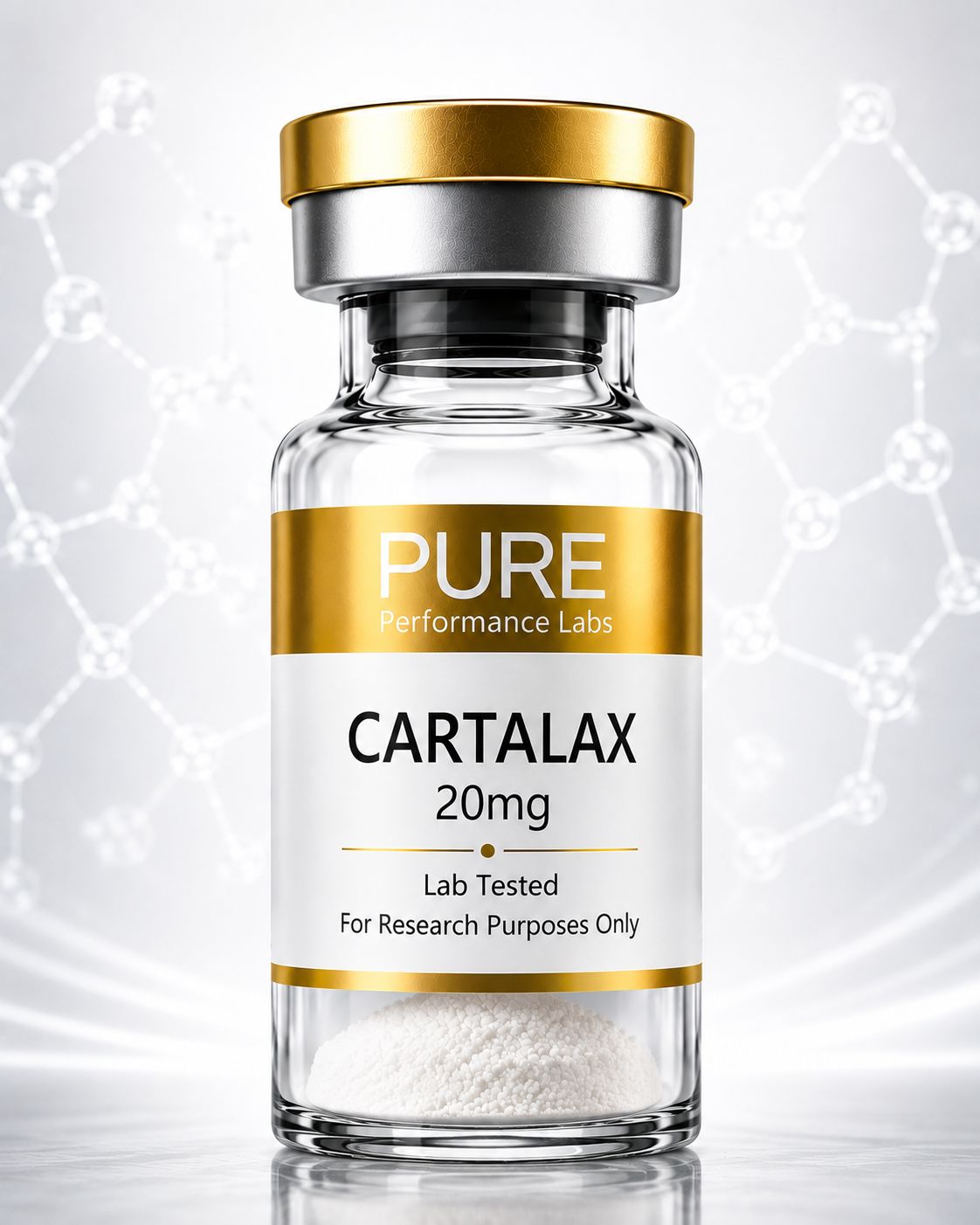
Cartalax 20mg

Cartalax 20mg

Research Grade Peptide
  • Research Grade
  • 99% Purity
  • Third-Party Verified
Reference Strength: 20mg
R799,00
CAS: Not established (no universally verified public CAS number)
Formula: C12H19N3O8
Molecular Weight: 333.29 g/mol
Chemical Name / Amino Acid Sequence: Ala-Glu-Asp (AED)

Availability: In stock

SKU: LAX20

Cartalax 20mg

R799,00

Cartalax is a synthetic tripeptide bioregulator (Ala-Glu-Asp; AED) investigated for its potential role in connective tissue biology, extracellular matrix homeostasis and healthy ageing.

Availability: In stock

SKU: LAX20 Category:
Included with your purchase Each qualifying product includes 3ml of 0.9% Benzyl Alcohol Bacteriostatic Water.

Peptide Calculator

Quickly calculate your reconstitution values.

Open Calculator

Research Overview

About Cartalax 20mg

Cartalax belongs to the Khavinson peptide bioregulator family. Laboratory studies have investigated its effects on fibroblast activity, cartilage biology, gene expression and cellular maintenance. Published human dosing data remain limited.

How It Works in Research

Preclinical studies suggest Cartalax (AED) may modulate gene expression involved in connective tissue maintenance. Laboratory models have reported increased Ki-67, SIRT-1 and SIRT-6 expression, reduced p53 and caspase-3 activity, and decreased MMP-9 synthesis, supporting extracellular matrix homeostasis.

Research Applications

• Connective tissue • Cartilage biology • Fibroblast function • Healthy ageing • Extracellular matrix • Cellular repair

Researchers study Cartalax because it may help regulate cellular processes involved in maintaining healthy connective tissue and cartilage.

Product Specifications

  • Product Name: Cartalax
  • Alternate Chemical Name: AED (Alanyl-Glutamyl-Aspartic Acid)
  • Other Names: AED peptide, T-31
  • CAS Number: Not established (no universally verified public CAS number)
  • PubChem CID: 87815447
  • Molecular Formula: C12H19N3O8
  • Molecular Weight: 333.29 g/mol

Research Information

  • Amino Acid Sequence: Ala-Glu-Asp (AED)
  • Reference Strength: 20 mg
  • Appearance: White to off-white lyophilised powder
  • Purity Standard: ≥98% (HPLC)
  • Category: Khavinson Tripeptide Bioregulator
  • Storage: 2–8°C after reconstitution

Mechanism of Action

Preclinical studies suggest Cartalax (AED) may modulate gene expression involved in connective tissue maintenance. Laboratory models have reported increased Ki-67, SIRT-1 and SIRT-6 expression, reduced p53 and caspase-3 activity, and decreased MMP-9 synthesis, supporting extracellular matrix homeostasis.

Potential Benefits in Research

Preclinical research has explored potential support for fibroblast proliferation, connective tissue maintenance, cartilage biology and healthy ageing.

Safety Profile

Preclinical research has explored potential support for fibroblast proliferation, connective tissue maintenance, cartilage biology and healthy ageing.

Research Applications

Connective tissue
Cartilage biology
Fibroblast function
Healthy ageing
Extracellular matrix
Cellular repair
Educational protocol only; published human clinical dosing remains limited.

REFERENCE RECONSTITUTION INFORMATION

Goal: Support connective tissue homeostasis and fibroblast function based on preclinical research. Schedule: Once-daily subcutaneous injections. Cycle Length: 8–12 weeks (optional extension to 16 weeks). Dose Range: 2–5 mg daily. Reconstitution: Add 3.0 mL bacteriostatic water to one 20 mg vial (6.67 mg/mL).

Always follow sterile preparation techniques when handling research peptides.

Educational protocol only; published human clinical dosing remains limited.

General Preparation

• Use a new sterile insulin syringe for each injection. • Rotate injection sites. • Inject at a consistent time each day. • Store refrigerated after reconstitution. • Educational protocol only; published human clinical dosing remains limited.
  • Slowly add 3.0 mL bacteriostatic water down the inside wall of the vial. Allow the powder to dissolve naturally and gently swirl until clear. Do not shake vigorously.

CARTALAX (20MG)- RECONSTITUTION TABLES

Reference Handling Information

Reference information for laboratory handling of Cartalax 20mg.

  • Schedule: Once-daily subcutaneous injections.
  • Cycle Length: 8–12 weeks (optional extension to 16 weeks).
  • Dose Range: 2–5 mg daily.

Reference Parameters (Dosing Protocol)

Week / PhaseDaily DoseU-100 UnitsVolume
Weeks 1–22 mg (2,000 mcg)30 units0.30 mL
Weeks 3–43 mg (3,000 mcg)45 units0.45 mL
Weeks 5–84 mg (4,000 mcg)60 units0.60 mL
Weeks 9–125 mg (5,000 mcg)75 units0.75 mL
For laboratory research only.

Experimental Study Period

STUDY PERIOD
8–12 weeks (optional extension to 16 weeks).
RESEARCH CONTEXT
Support connective tissue homeostasis and fibroblast function based on preclinical research.
Once-daily subcutaneous injections.
📄

View Certificate of Analysis

View Certificate of Analysis Each batch of Cartalax is independently tested by third-party laboratories. Download the Certificate of Analysis to verify purity, identity, and quality.

99.6%
Verified Purity
3rd Party
Lab Tested
Certified
Quality Assured

Reviews

There are no reviews yet.

Only logged in customers who have purchased this product may leave a review.

Reviews

There are no reviews yet.

Only logged in customers who have purchased this product may leave a review.

FOR RESEARCH PURPOSES ONLY

This product is intended for research and laboratory use only. Always consult qualified researchers and follow appropriate safety protocols.

Scroll to Top