FOR RESEARCH PURPOSES ONLY
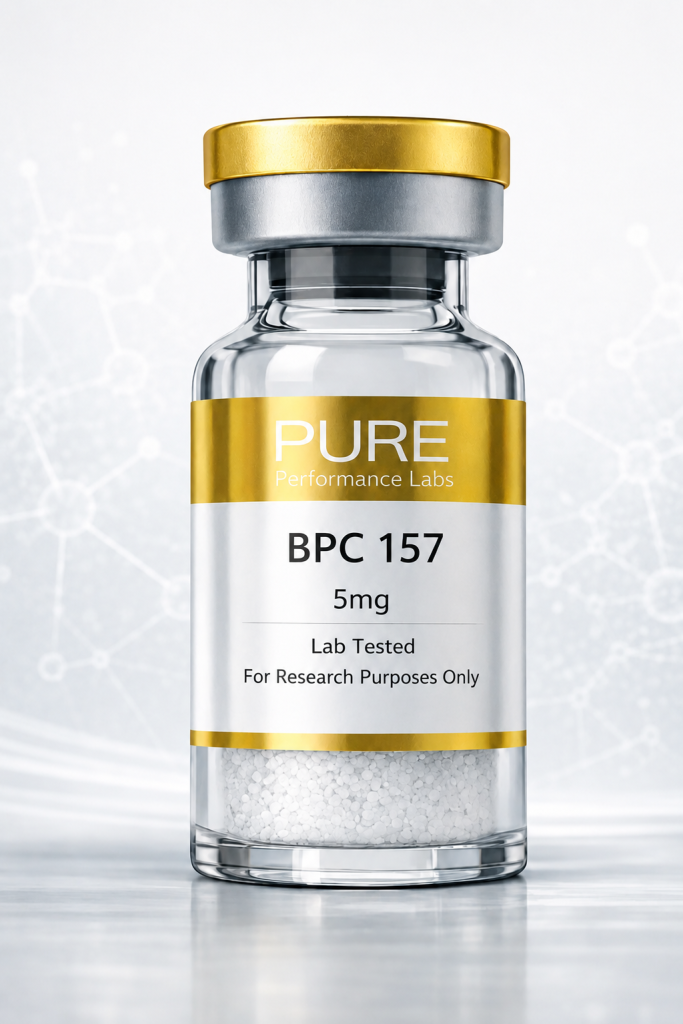
BPC157 5mg research grade peptide - Pure Performance Labs

BPC-157

Research Grade Peptide
  • Research Grade
  • 99% Purity
  • Third-Party Verified
Reference Strength: 10mg
Price range: R450,00 through R599,00
CAS: 137525-51-0
Formula: C62H98N16O22
Molecular Weight: 1419.56
Chemical Name / Amino Acid Sequence: gly-glu-pro-pro-pro-gly-lys-pro-ala-asp-asp-ala-gly-leu-val

BPC-157

Price range: R450,00 through R599,00

Pentadecapeptide — studied for tissue repair, tendon healing, and gut mucosal integrity 

Also available as a pre-filled Research Pen: 10mg.

Included with your purchase Each qualifying product includes 3ml of 0.9% Benzyl Alcohol Bacteriostatic Water.

Peptide Calculator

Quickly calculate your reconstitution values.

Open Calculator

Research Overview

About BPC-157

BPC-157 is a synthetic peptide consisting of 15 amino acids, derived from a protective protein found in gastric juice.

How It Works in Research

Research indicates that BPC-157 acts as a regenerative agent by modulating the nitric oxide (NO) system and upregulating growth hormone receptors in fibroblasts. Studies suggest this allows the peptide to support the protection and renewal of various tissues, extending its reach from the digestive tract into the musculoskeletal and nervous systems.

Research Applications

Gastrointestinal health: Studied for its ability to support stomach ulcer healing, inflammatory bowel disease (IBD), and leaky gut by maintaining mucosal integrity. Musculoskeletal recovery: Researched for its capacity to accelerate the healing of tendons, ligaments, and skeletal muscle after injury. Vascular support: Known in research for promoting new blood vessel formation to restore blood flow in affected tissues. Systemic protection: Observed in studies to protect various organs from damage caused by toxins, alcohol, and NSAIDs.

This is a simplified explanation for educational purposes. For detailed scientific information, see the Product Specifications section below.

Functional Performance Profile

Recovery Support
Muscle Growth
Tissue Repair

Key Benefits

  • Tissue Repair
  • Enhanced Recovery
  • Injury Support

Product Specifications

  • Purity: 99.5%
  • Form: Lyophilized peptide
  • Storage: 2-9°C Refrigerated

Research Information

  • Research Information
  • Type: Body protection compound
  • Focus: Tissue repair and recovery

Research Reference Parameters — Laboratory Use Only

  • Initial phase: 0.25 mg once or twice daily
  • Standard research range: 0.25 mg-0.50 mg once or twice daily
  • Advanced research range: 0.75 mg-1.0 mg once or twice daily
  • Research cycles typically extend 4-8 weeks
For laboratory research only.

Mechanism of Action

BPC-157 works through multiple pathways: promoting angiogenesis via VEGF, modulating nitric oxide (NO) production, regulating growth factor expression (EGF, FGF), and stabilizing cellular junctions. It appears to accelerate healing by optimizing the body's natural repair mechanisms.

Key Research Characteristics

Cytoprotective Gastric Peptide

BPC-157 is a pentadecapeptide derived from a protective protein found in gastric juice (Body Protection Compound). It demonstrates remarkable stability and systemic effects despite its gastric origin.

Angiogenic Properties

Promotes rapid formation of new blood vessels (angiogenesis) through VEGF upregulation, essential for delivering nutrients and oxygen to healing tissues.

Broad-Spectrum Healing Action

Research shows effectiveness across multiple tissue types: tendons, ligaments, muscles, bone, gastrointestinal tract, and nervous system - a rare multi-tissue healing profile.

Potential Benefits in Research

Musculoskeletal Healing

  • Accelerated tendon-to-bone healing in injury models
  • Enhanced ligament repair and strength
  • Improved muscle tear recovery
  • Reduced healing time for bone fractures
  • Gastrointestinal Protection
  • Healing of gastric and intestinal ulcers
  • Protection against NSAID-induced gut damage
  • Improved inflammatory bowel disease markers
  • Enhanced intestinal barrier function (leaky gut)
  • Neuroprotection & Inflammation
  • Neuroprotective effects in brain injury models
  • Reduced systemic and local inflammation
  • Accelerated peripheral nerve regeneration
  • Improved post-surgical recovery markers

Safety Profile

Important: These side effects are reported from research studies and may vary by individual, dosage, and protocol. Always monitor subjects carefully and consult with qualified researchers.

Generally well-tolerated with minimal side effects

  • Mild injection site discomfort
  • Transient dizziness or lightheadedness (rare)
  • Temporary fatigue during healing phase
  • Mild gastrointestinal changes as gut heals
  • Hot or cold sensations (infrequent)

Research Applications

Tendon and ligament injury research
Gastrointestinal disorders (IBD, IBS, ulcers)
Post-surgical healing and recovery
Neuroprotection and brain injury studies
Chronic inflammation research
Research Note: The information presented here is based on published scientific literature and research protocols. Individual results may vary based on research design, subject characteristics, and methodological approaches. Always conduct appropriate due diligence and follow institutional research guidelines.

REFERENCE RECONSTITUTION INFORMATION

This guide explains how research peptides are commonly reconstituted using bacteriostatic water (BAC water), and shows how dosing volumes correspond to syringe units. Always follow sterile preparation techniques when handling research peptides.

Always follow sterile preparation techniques when handling research peptides.

⚠️ DISCLAIMER: This guide is for educational purposes only and is not medical advice. For research use only. Not for human consumption.

General Preparation

Important: Allow product vial and BAC water to reach room temperature before reconstituting to reduce condensation uptake
  • Use bacteriostatic water (BAC water) only
  • Inject water slowly down the inside of the vial
  • Do not shake the vial
  • Gently swirl to dissolve the peptide powder
  • Store refrigerated after mixing
  • Use sterile technique when handling

BPC-157 (10mg) - RECONSTITUTION TABLES

Reference Handling Information

Reference information for laboratory handling of BPC-157.

  • Route
  • Subcutaneous injection
  • Injection Sites
  • Rotate injection sites (abdomen, thighs, upper arms)
  • Use sterile technique when handling and administering
  • Cycle Length: 8–12 weeks (optional extension to 16 weeks)
  • Timing: Any consistent time

Reference Parameters (Dosing Protocol (3ml BAC Water; 3.33 mg/ml))

WEEKDOSE PER INJECTIONUNITS (PER INJECTION) (ML)
Weeks 1–20.20 mg6 units (0.06ml)
Weeks 3–40.40 mg12 units (0.12ml)
Weeks 5–8+0.60 mg18 units (0.18ml)
For laboratory research only.

Reference Parameters (Dosing Protocol (2ml BAC Water; 5.00 mg/ml))

WEEKDOSE PER INJECTIONUNITS (PER INJECTION) (ML)
Weeks 1–20.20 mg4 units (0.04ml)
Weeks 3–40.40 mg8 units (0.08ml)
Weeks 5–8+0.60 mg12 units (0.12ml)
For laboratory research only.

Experimental Study Period

STUDY PERIOD
4–8 weeks
WASHOUT PERIOD
2–4 weeks
ADJUSTMENT NOTES
Not required
RESEARCH CONTEXT
Allows tissue recovery and maintains healing response effectiveness
These tables show common research dosages. Always use an insulin syringe marked with units for accurate measurement. Contact our research support team for additional guidance.
📄

View Certificate of Analysis

Each batch of BPC-157 is independently tested by third-party laboratories. Download the Certificate of Analysis to verify purity, identity, and quality.

DOWNLOAD COA
99.5%
Verified Purity
3rd Party
Lab Tested
Certified
Quality Assured

Research Grade Peptide

Research Grade
> 99% Purity
Third-Party Verified

Dosage: 10mg

milligrams

10mg, 5mg

Reviews

There are no reviews yet.

Only logged in customers who have purchased this product may leave a review.

Reviews

There are no reviews yet.

Only logged in customers who have purchased this product may leave a review.

FOR RESEARCH PURPOSES ONLY

This product is intended for research and laboratory use only. Always consult qualified researchers and follow appropriate safety protocols.

Scroll to Top