

| Weight | 0,05 kg |
|---|
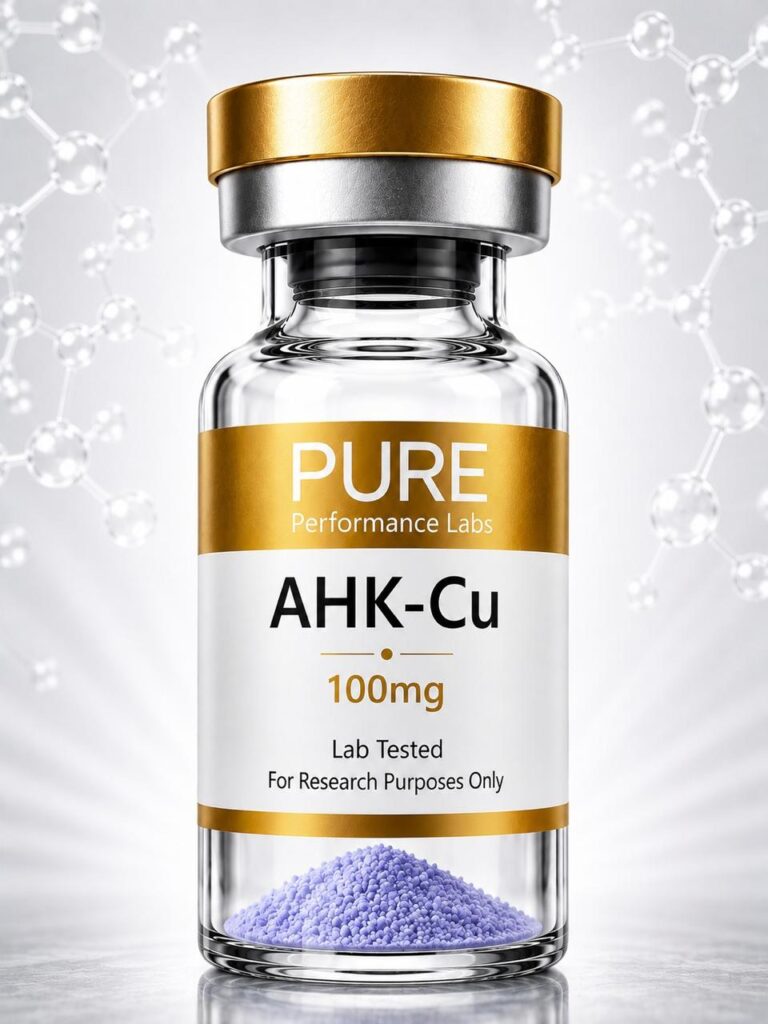
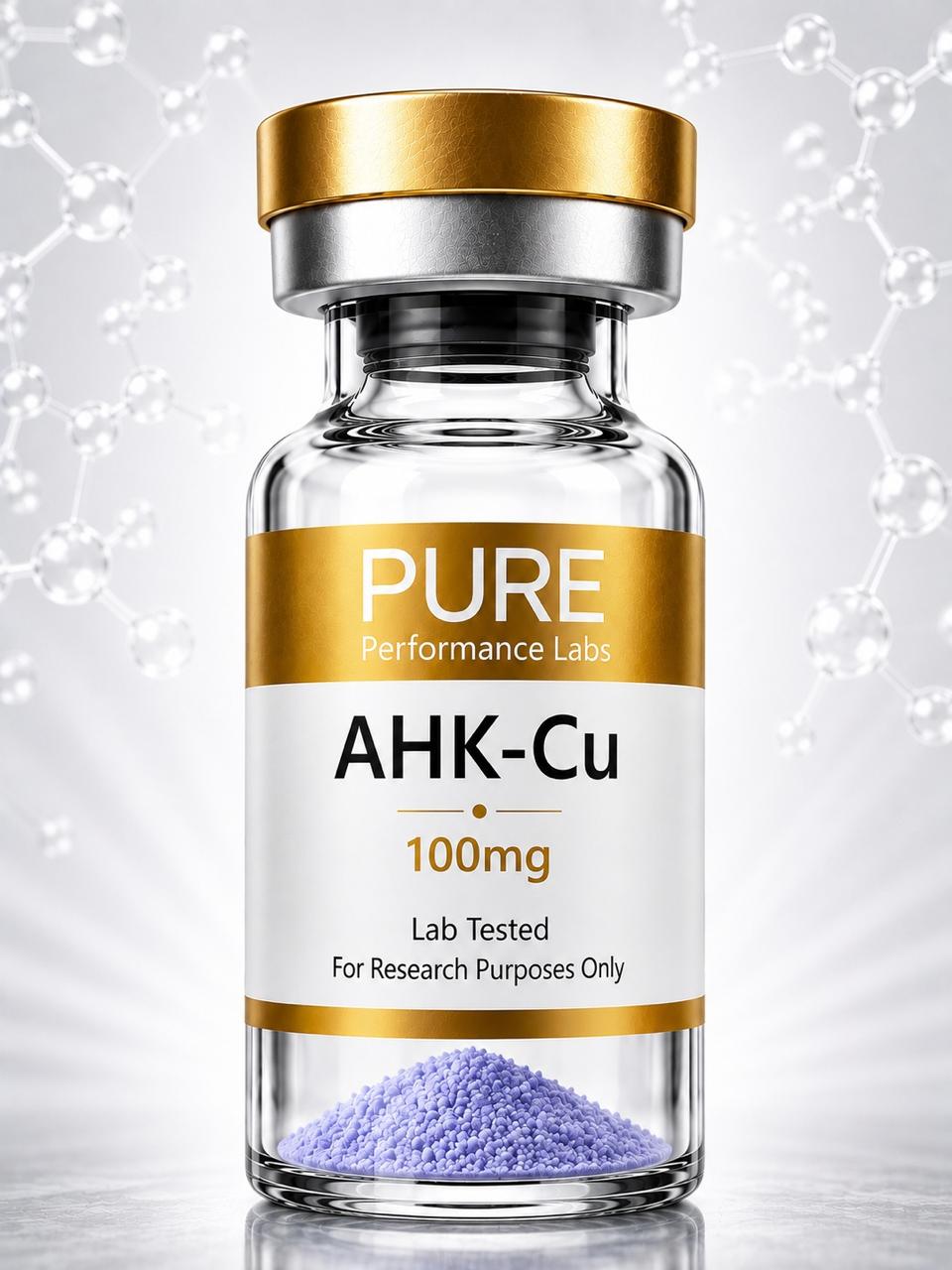
AHK-Cu 100mg
Research Grade Peptide
- Research Grade
- 99% Purity
- Third-Party Verified
Reference Strength: 100mg
R799,00
Chemical Name / Amino Acid Sequence: Ala–His–Lys-Cu
Availability: In stock
SKU: AU100
R799,00
AHK-Cu (Copper Tripeptide-3) is a copper-binding tripeptide composed of alanine, histidine and lysine complexed with copper.
Research has focused particularly on human hair-follicle biology, dermal papilla-cell proliferation and extracellular-matrix activity.
AHK-Cu is closely related to GHK-Cu but differs by one amino acid. Its published evidence base is considerably smaller, with its strongest direct experimental evidence centred on hair follicles and dermal papilla cells.
Availability: In stock
Included with your purchase
Each qualifying product includes 3ml of 0.9% Benzyl Alcohol Bacteriostatic Water.
Complimentary Purchase Kit
Every qualifying vial includes a complimentary purchase kit at no additional cost.
Research Overview
About AHK-Cu 100mg
AHK-Cu is a synthetic copper-peptide complex also known as Copper Tripeptide-3. Its peptide sequence is Ala–His–Lys-Cu. Laboratory research has evaluated AHK-Cu in cultured human dermal papilla cells and ex-vivo human hair follicles. A published study reported that AHK-Cu stimulated human hair-follicle elongation and increased proliferation of cultured dermal papilla cells at very low experimental concentrations. These findings make AHK-Cu particularly relevant to research involving hair-follicle signalling, dermal papilla cells, scalp biology, dermal-cell function, fibroblast activity and extracellular-matrix maintenance.
How It Works in Research
AHK-Cu consists of the tripeptide alanine-histidine-lysine coordinated with a copper ion. Copper is an important biological cofactor involved in numerous cellular processes, while short peptides can participate in cellular signalling and metal transport. The strongest direct AHK-Cu research comes from experiments involving isolated human hair follicles and cultured dermal papilla cells. These specialised cells are located at the base of the hair follicle and play an important role in follicle development and the normal hair-growth cycle. Laboratory experiments found that AHK-Cu stimulated human hair-follicle elongation and increased the proliferation of cultured dermal papilla cells. Researchers also observed changes in Bcl-2/Bax, cleaved caspase-3 and cleaved PARP signalling associated with cellular survival and apoptosis. These findings support continued investigation of AHK-Cu in follicular biology, dermal-cell function and extracellular-matrix maintenance. However, some mechanistic findings were not statistically significant and should be interpreted cautiously.
Research Applications
Hair-follicle growth and elongation • Dermal papilla-cell proliferation • Hair-cycle biology • Scalp biology • Dermal fibroblast activity • Collagen and extracellular-matrix research • Cellular survival and apoptosis signalling • Cosmetic skin and hair research
AHK-Cu is a small copper peptide studied primarily for its interaction with cells involved in hair growth and skin structure.
Laboratory research suggests that it may stimulate specialised cells located at the base of the hair follicle while influencing biological pathways associated with follicle growth and cellular survival.
Product Specifications
- Product Name: AHK-Cu
- Alternate Name: Copper Tripeptide-3
- Peptide Sequence: Ala–His–Lys-Cu
- Reference Strength: 100 mg
- Appearance: Light blue to blue material
Research Information
- Category: Copper-binding tripeptide
- Primary Research Category: Hair & Dermal Research
- Evidence Status: Primarily in-vitro / ex-vivo
- Human Injectable Protocol: Not established
- Human Pharmacokinetics: Not established
Mechanism of Action
AHK-Cu consists of the tripeptide alanine-histidine-lysine coordinated with a copper ion. Copper is an important biological cofactor involved in numerous cellular processes, while short peptides can participate in cellular signalling and metal transport. The strongest direct AHK-Cu research comes from experiments involving isolated human hair follicles and cultured dermal papilla cells. Dermal papilla cells are specialised fibroblast-like cells located at the base of the hair follicle. These cells play an important role in regulating follicle development and the normal hair-growth cycle. In laboratory experiments, AHK-Cu stimulated elongation of human hair follicles ex vivo and increased proliferation of cultured dermal papilla cells. Researchers also investigated signalling pathways associated with cellular survival and apoptosis. AHK-Cu treatment was associated with: · Increased Bcl-2/Bax ratio · Reduced cleaved caspase-3 · Reduced cleaved PARP These findings suggest that AHK-Cu may influence signalling pathways associated with dermal papilla-cell survival.
Key Research Characteristics
Copper-binding tripeptide complex
Sequence: Ala–His–Lys-Cu Also known as Copper Tripeptide-3 Studied in human hair follicles ex vivo Studied in cultured human dermal papilla cells Investigated for dermal fibroblast activity Investigated for extracellular-matrix activity Research evidence is primarily laboratory and ex-vivo
Potential Benefits in Research
Hair-Follicle Research
- AHK-Cu stimulated elongation of human hair follicles in an ex-vivo experimental model.
Dermal Papilla-Cell Research
- AHK-Cu increased proliferation of cultured human dermal papilla cells.
Cellular Survival Signalling
- Experimental changes have been observed in:
- Bcl-2/Bax signalling
- Caspase-3
- PARP
These pathways are associated with cellular survival and apoptosis.
Dermal & Extracellular-Matrix Research
- Copper peptides are of research interest for their potential effects on dermal fibroblasts and extracellular-matrix processes.
AHK-Cu-specific evidence in these areas remains considerably more limited than the evidence available for GHK-Cu.
Safety Profile
The principal AHK-Cu evidence consists of laboratory and ex-vivo experiments rather than controlled human dosing trials.
Consequently, the following cannot currently be reliably established:
- Systemic adverse-effect frequency
- Human pharmacokinetics
- Optimal systemic exposure
- Human injectable dosing
- Long-term injectable safety
- Ideal treatment duration
Copper-peptide effects may also depend significantly on concentration and formulation.
Research Applications
Hair follicles
Dermal papilla cells
Dermal fibroblasts
Hair-growth signalling
Cellular survival pathways
Extracellular-matrix models
These are laboratory experimental concentrations and should not be converted directly into human injection doses.
REFERENCE RECONSTITUTION INFORMATION
Research Goal Investigate AHK-Cu activity in: · Hair follicles · Dermal papilla cells · Dermal fibroblasts · Hair-growth signalling · Cellular survival pathways · Extracellular-matrix models Evidence Status Primarily in-vitro and ex-vivo research Published Experimental Concentrations The primary human hair-follicle and dermal papilla-cell study evaluated AHK-Cu at approximately: 10⁻¹² to 10⁻⁹ M These are laboratory experimental concentrations and should not be converted directly into human injection doses.
Always follow sterile preparation techniques when handling research peptides.
These are laboratory experimental concentrations and should not be converted directly into human injection doses.
General Preparation
AHK-Cu and GHK-Cu are related but distinct copper peptides. AHK-Cu differs from GHK-Cu at the first amino acid: AHK-Cu = Alanine–Histidine–Lysine-Cu GHK-Cu = Glycine–Histidine–Lysine-Cu The strongest direct AHK-Cu research is centred on human hair follicles and dermal papilla cells. Published research currently does not provide sufficient evidence to establish an evidence-based: · Human injectable dose · BAC-water reconstitution schedule · Subcutaneous dosing protocol · 5-days-on / 2-days-off protocol Technical specifications should be cross-checked against the certificate of analysis for the exact Pure Performance Labs AHK-Cu 100 mg batch before publication.
- Confirm the exact chemical form against the batch COA.
- Confirm peptide identity and purity before experimental use.
- Use the solvent specified by the validated experimental method.
- Select concentration according to the experimental design.
- Protect prepared material from unnecessary freeze-thaw cycles.
- Document preparation date and concentration.
- Document storage temperature.
- Document experimental conditions.
- Do not extrapolate cell-culture concentrations directly to human administration.
AHK-Cu (100mg) - RECONSTITUTION TABLES
Reference Handling Information
Reference information for laboratory handling of AHK-Cu 100mg.
- Storage requirements should ultimately follow the certificate of analysis and stability information supplied for the specific batch.
- Lyophilised / Dry Material
- Store:
- −20°C for long-term storage
- or, where appropriate:
- −80°C for extended laboratory storage
- Keep:
- Sealed
- Dry
- Protected from moisture
- Protected from unnecessary temperature fluctuations
- Prepared Research Solutions
- Prepared laboratory solutions should be stored according to the solvent, concentration and experimental protocol being used.
- Avoid unnecessary repeated freeze-thaw cycles.
Reference Parameters (Dosing Protocol (3ml BAC Water; ~33.3 mg/ml))
| Week | Dose Per Injection | Units (per injection) (ml) |
|---|---|---|
| Weeks 1–2 | 1.5 mg | 4.5 units (0.045ml) |
| Weeks 3–4 | 2.0 mg | 6 units (0.06ml) |
| Weeks 5–12 | 3.0 mg | 9 units (0.09ml) |
| Max | 4.0 mg | 12 units (0.12ml) |
For laboratory research only.
Reference Parameters (Alternative Protocol (3ml BAC Water; 33.3 mg/ml) - 3× Weekly)
| WEEK | DOSE PER INJECTION | UNITS (PER INJECTION) (ML) |
|---|---|---|
| Weeks 1–12+ | 4.0 mg | 12 units (0.12ml) |
For laboratory research only.
Experimental Study Period
STUDY PERIOD
8–12 weeks
WASHOUT PERIOD
4–6 weeks
ADJUSTMENT NOTES
Not required
RESEARCH CONTEXT
Maintains tissue remodeling response and prevents adaptation
These tables show common research dosages. Always use an insulin syringe marked with units for accurate measurement. Contact our research support team for additional guidance.
View Certificate of Analysis
View Certificate of Analysis Each batch of AHK-Cu is independently tested by third-party laboratories. Download the Certificate of Analysis to verify purity, identity, and quality.
99%
Verified Purity
3rd Party
Lab Tested
Certified
Quality Assured
Only logged in customers who have purchased this product may leave a review.
Related products
Reviews
There are no reviews yet.
Only logged in customers who have purchased this product may leave a review.
PURE PERFORMANCE LABS
Recommended Research Products
Explore related compounds commonly viewed alongside this product.


FOR RESEARCH PURPOSES ONLY
This product is intended for research and laboratory use only. Always consult qualified researchers and follow appropriate safety protocols.
Reviews
There are no reviews yet.