

| Weight | 0,05 kg |
|---|
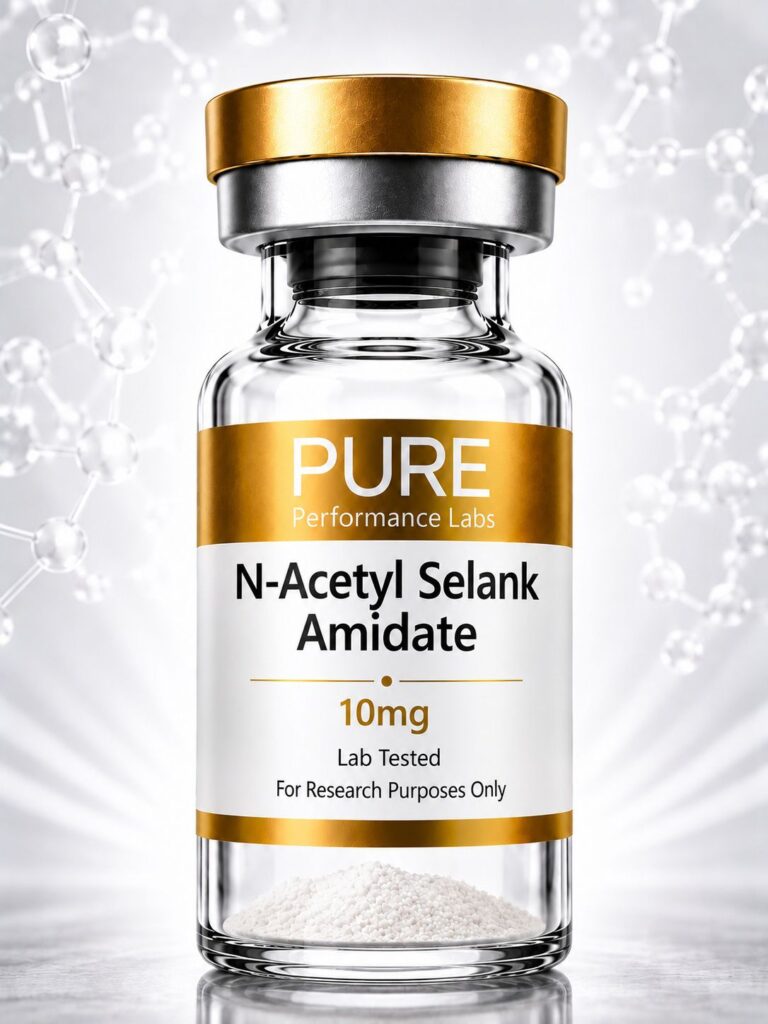
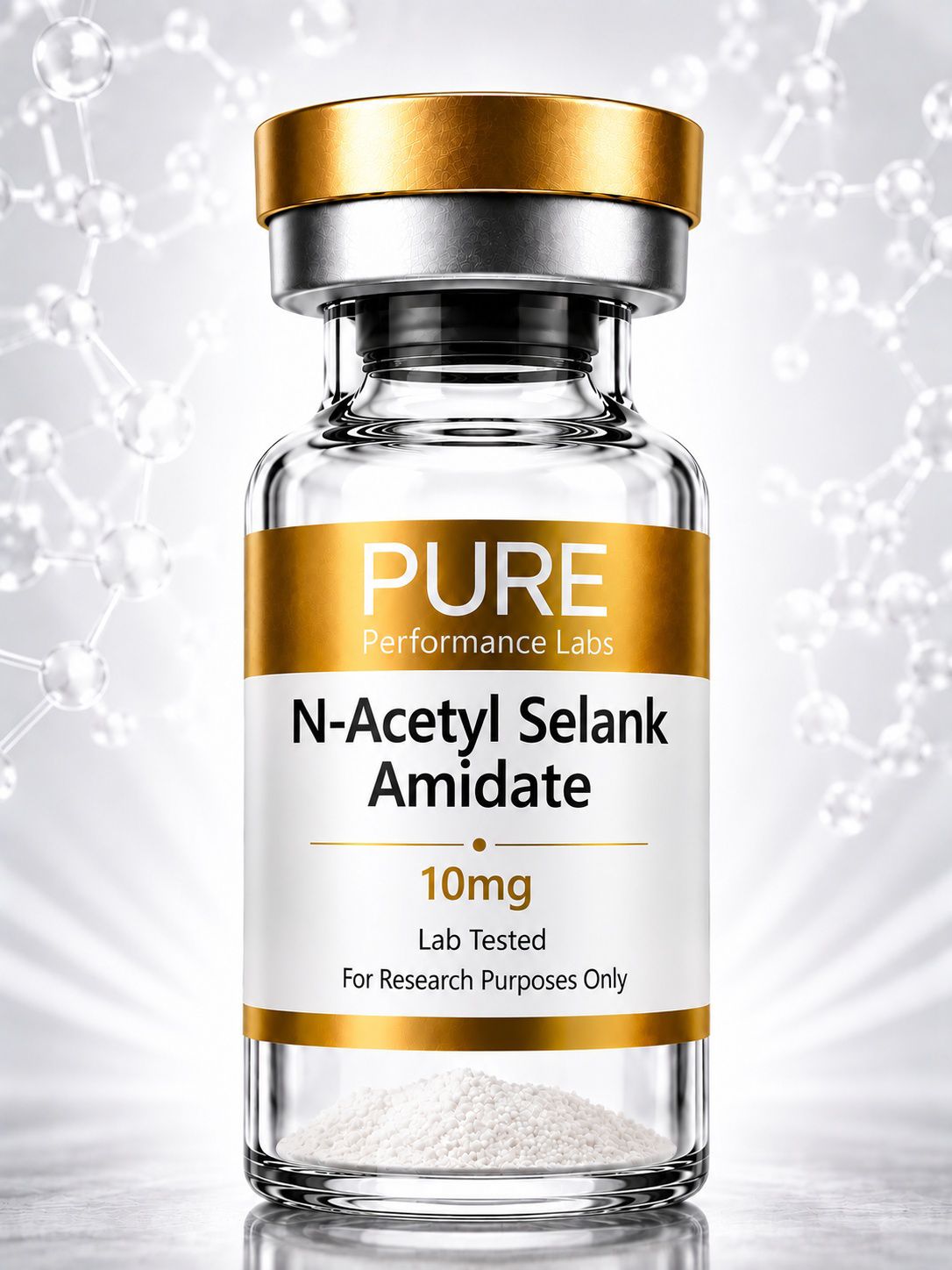
N-Acetyl Selank Amidate 10mg
Research Grade Peptide
- Research Grade
- 99% Purity
- Third-Party Verified
Reference Strength: 10mg
R820,00
Formula: C35H60N12O9
Molecular Weight: 792.94 g/mol
Chemical Name / Amino Acid Sequence: Ac-Thr-Lys-Pro-Arg-Pro-Gly-Pro-NH₂
Availability: In stock
SKU: NA-SK10
R820,00
N-Acetyl Selank Amidate (NA-Selank Amidate) is a terminally modified analogue of Selank. It retains the Selank core sequence while adding N-terminal acetylation and C-terminal amidation, producing the sequence Ac-Thr-Lys-Pro-Arg-Pro-Gly-Pro-NH₂ (Ac-TKPRPGP-NH₂). Research interest centres on stress and anxiety signalling, GABAergic neurotransmission, cognition and peptide stability.
Availability: In stock
Included with your purchase
Each qualifying product includes 3ml of 0.9% Benzyl Alcohol Bacteriostatic Water.
Complimentary Purchase Kit
Every qualifying vial includes a complimentary purchase kit at no additional cost.
Research Overview
About N-Acetyl Selank Amidate 10mg
Selank is a synthetic regulatory heptapeptide derived from the tuftsin sequence and extended with Pro-Gly-Pro. N-Acetyl Selank Amidate preserves the seven-amino-acid Selank core but chemically modifies both peptide termini. N-terminal acetylation and C-terminal amidation are commonly used peptide modifications intended to reduce susceptibility to terminal peptidases and alter physicochemical stability.
How It Works in Research
The best-characterized neurological mechanism comes from research on standard Selank. Selank has been investigated for its interaction with the GABAergic system, the brain's principal inhibitory neurotransmitter network. Experimental studies have reported changes in the expression of genes involved in GABA receptors, transporters, ion channels and other neurotransmission pathways. Research in rat frontal cortex found that Selank produced complex changes in neurotransmission-related gene expression and supported a possible mechanism involving allosteric modulation of the GABAergic system. This differs from simply acting as GABA itself; the proposed effect is modulation of how the signalling system behaves. N-Acetyl Selank Amidate adds chemical protection to both ends of the parent Selank sequence. The N-terminus is acetylated and the C-terminus is amidated. These modifications provide a plausible strategy for reducing enzymatic degradation, but there is not yet robust human pharmacokinetic evidence demonstrating exactly how much longer this analogue persists or whether it produces stronger clinical effects than standard Selank. Accordingly, claims that N-Acetyl Selank Amidate has superior blood-brain-barrier penetration, a specific extended half-life or substantially greater potency should be treated as hypotheses rather than established human findings.
Research Applications
Stress and anxiety-related signalling • GABAergic neurotransmission • Neurotransmitter gene expression • Cognitive and nootropic research • Learning and memory research • Neuroregulatory peptide signalling • Peptide stability and terminal modification • Comparison with standard Selank
Think of standard Selank as the original seven-amino-acid peptide. N-Acetyl Selank Amidate uses the same core peptide but protects both ends of the molecule.
The research rationale is that these modifications may make the peptide harder for enzymes to break down. The calming and cognitive mechanisms often discussed for this product come mainly from studies of standard Selank rather than direct clinical studies of the modified version.
Product Specifications
- Product Name: N-Acetyl Selank Amidate
- Alternate Name: N-Acetyl Selank Amide / NA-Selank Amidate
- Sequence: Ac-Thr-Lys-Pro-Arg-Pro-Gly-Pro-NH₂
- Short Sequence: Ac-TKPRPGP-NH₂
- Molecular Formula: C35H60N12O9
- Monoisotopic Mass: 792.4606 Da
- Approx. Average Molecular Weight: 792.94 g/mol
Research Information
- Reference Strength: 10 mg
- Category: Modified neuroregulatory heptapeptide / Selank analogue
- Terminal Modifications: N-terminal acetylation; C-terminal amidation
- Research Focus: Stress, GABAergic signalling, cognition and peptide-stability research
- CAS Number: Verify against exact batch COA; not relied upon here
Mechanism of Action
The best-characterized neurological mechanism comes from research on standard Selank. Selank has been investigated for its interaction with the GABAergic system, the brain's principal inhibitory neurotransmitter network. Experimental studies have reported changes in the expression of genes involved in GABA receptors, transporters, ion channels and other neurotransmission pathways. Research in rat frontal cortex found that Selank produced complex changes in neurotransmission-related gene expression and supported a possible mechanism involving allosteric modulation of the GABAergic system. N-Acetyl Selank Amidate adds chemical protection to both ends of the parent Selank sequence. The N-terminus is acetylated and the C-terminus is amidated. These modifications provide a plausible strategy for reducing enzymatic degradation.
Key Research Characteristics
Modified Selank heptapeptide • Sequence: Ac-TKPRPGP-NH₂ • N-terminal acetylation • C-terminal amidation • Analytically characterized by high-resolution mass spectrometry • Research interest in GABAergic signalling, stress response and cognition • Direct clinical evidence for the modified analogue is limited
Potential Benefits in Research
Parent Selank has been investigated for anxiolytic and stress-related effects.
Selank research supports interaction with GABAergic neurotransmission and associated gene-expression pathways.
Parent-peptide research has explored cognitive, learning and memory effects.
Terminal acetylation and amidation provide a research rationale for studying altered peptide stability.
These findings do not establish clinical efficacy of N-Acetyl Selank Amidate itself.
Safety Profile
Possible local irritation with injectable research preparations.
Potential neurological effects may vary with exposure and individual sensitivity.
The modified analogue should not automatically be assumed to share the same pharmacokinetics as standard Selank.
Claims of superior potency or duration require direct comparative evidence.
Product identity and purity should be confirmed against the batch COA.
Research Applications
Stress and anxiety-related signalling • GABAergic neurotransmission • Neurotransmitter gene expression • Cognitive and nootropic research • Learning and memory research • Neuroregulatory peptide signalling • Peptide stability and terminal modification • Comparison with standard Selank
Claims that N-Acetyl Selank Amidate has superior blood-brain-barrier penetration, a specific extended half-life or substantially greater potency should be treated as hypotheses rather than established human findings.
REFERENCE RECONSTITUTION INFORMATION
Research Goal: Investigate the modified Selank analogue in neuroregulatory and peptide-stability research. Reference Strength: 10 mg vial. Supplied Reference Dilution: 2.0 mL bacteriostatic water. Calculated Concentration: 5 mg/mL. Supplied Educational Dose Range: 0.5–1.5 mg. Supplied Schedule: staged over 6 weeks. Evidence Status: this dosing schedule is educational and is not established by dedicated human clinical trials of N-Acetyl Selank Amidate.
Always follow sterile preparation techniques when handling research peptides.
This dosing schedule is educational and is not established by dedicated human clinical trials of N-Acetyl Selank Amidate.
General Preparation
At 5 mg/mL, 1 unit on a U-100 syringe corresponds mathematically to 0.05 mg.
- Reference dilution: 10 mg + 2.0 mL bacteriostatic water = 5 mg/mL.
N-Acetyl Selank Amidate (10mg) - RECONSTITUTION TABLES
Reference Handling Information
Reference information for laboratory handling of N-Acetyl Selank Amidate 10mg.
- 5 days on / 2 days off weekly subcutaneous injection.
Reference Parameters (Dosing & Reconstitution Guide)
| Stage | Target Dose | BAC Water | Volume | U-100 Units |
|---|---|---|---|---|
| Weeks 1–2 — Starting initial | 0.5 mg | 2.0 mL | 0.10 mL | 10 units |
| Weeks 3–4 — Moderate | 1.0 mg | 2.0 mL | 0.20 mL | 20 units |
| Weeks 5–6 — Advanced | 1.5 mg | 2.0 mL | 0.30 mL | 30 units |
For laboratory research only.
Experimental Study Period
STUDY PERIOD
5 days
WASHOUT PERIOD
2 days
RESEARCH CONTEXT
Investigate the modified Selank analogue in neuroregulatory and peptide-stability research.
Staged over 6 weeks.
Lyophilized material: keep sealed, dry and protected from light.
For longer-term research storage, approximately −20 °C is commonly used for peptide material.
After preparation, refrigerated storage at 2–8 °C is commonly used for peptide research solutions.
Avoid repeated freeze–thaw cycles and vigorous agitation.
Exact post-reconstitution stability should follow formulation-specific or batch-specific validated data rather than assuming a universal expiry period.
View Certificate of Analysis
View Certificate of Analysis Each batch of N-Acetyl Selank Amidate is independently tested by third-party laboratories. Download the Certificate of Analysis to verify purity, identity, and quality.
99%
Verified Purity
3rd Party
Lab Tested
Certified
Quality Assured
Only logged in customers who have purchased this product may leave a review.
Related products
-
Cognitive & Longevity Research
Adamax
Price range: R599,00 through R950,00 Select options This product has multiple variants. The options may be chosen on the product page


Reviews
There are no reviews yet.
Only logged in customers who have purchased this product may leave a review.
PURE PERFORMANCE LABS
Recommended Research Products
Explore related compounds commonly viewed alongside this product.
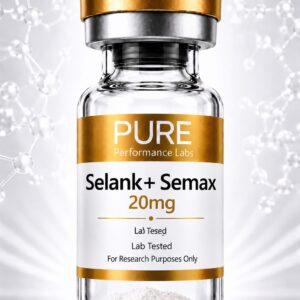


FOR RESEARCH PURPOSES ONLY
This product is intended for research and laboratory use only. Always consult qualified researchers and follow appropriate safety protocols.
Reviews
There are no reviews yet.